


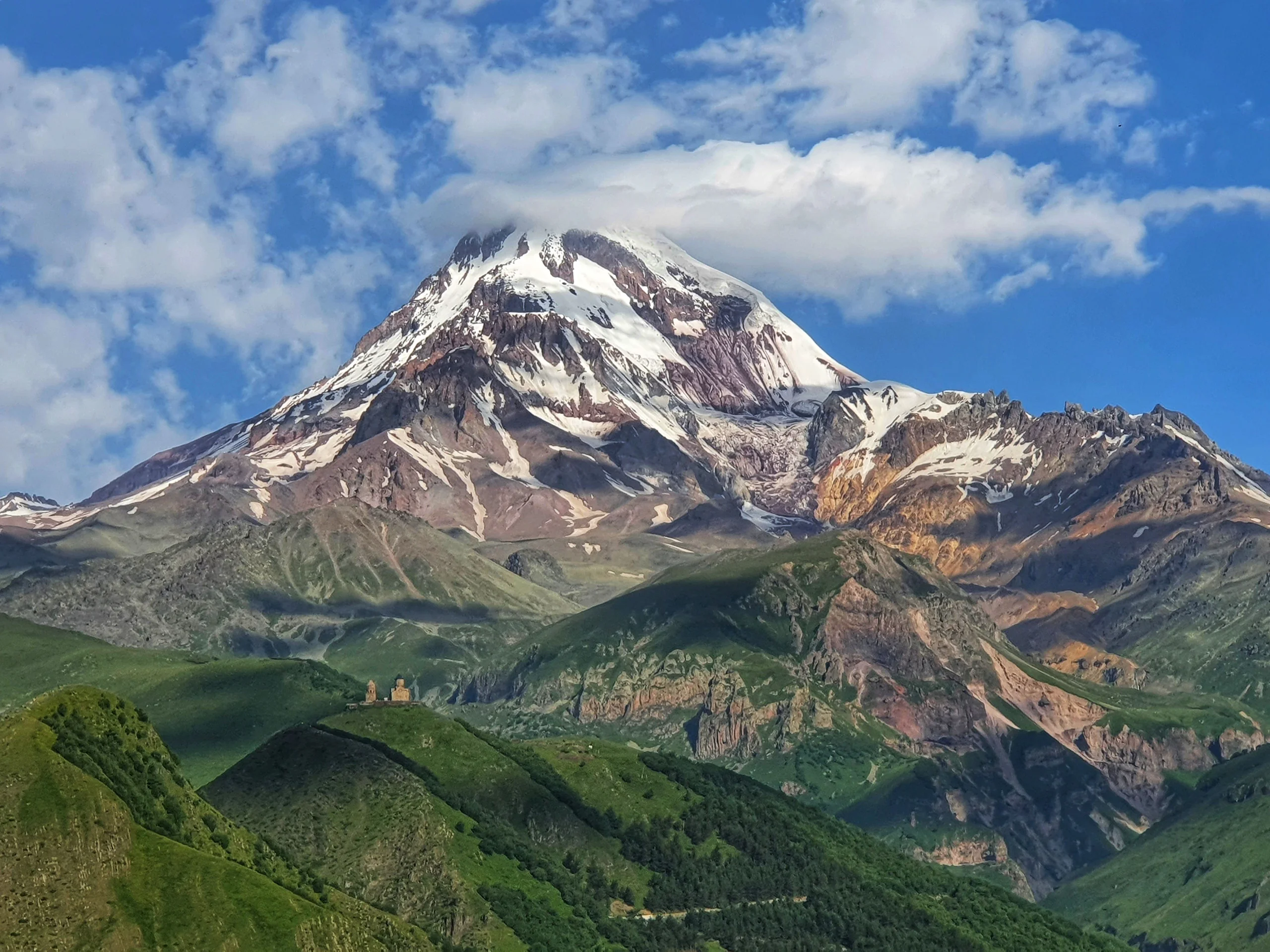
Elbrus (5642 m) is the highest peak in Europe and the lowest of the Seven Summits. Somewhat patronizingly it is said that “any tourist with fitness can climb Elbrus” — in reality the mountain has a mortality rate higher than many 8000-ers (per attempt) and claims 15–30 victims every year. It combines the unpredictable Caucasus weather, a fast ascent profile (the chairlift to 3750 m shortens acclimatization), and very cold windy conditions. This brief: what you need to know medically, when to turn back, and why this “easy” mountain kills more people than Mont Blanc.
Elbrus by the numbers
- Altitude: 5642 m (west peak), 5621 m (east peak)
- Location: North Caucasus, Kabardino-Balkaria Republic (Russia)
- Typical expedition length: 7–10 days
- Summit success rate: 30–50% (weather dependent, low compared to other 5–6000 m peaks)
- Historical mortality: 15–30 deaths annually — among the highest in commercial mountaineering
- Main causes of death: hypothermia, getting lost in blizzards, crevasse falls
- Summit temperature: typically −20 to −40°C, winds 50–120 km/h
Why Elbrus is medically harder than altitude suggests
Rapid ascent profile
The chairlift from Terskol (2100 m) takes trekkers to Bochki base (3750 m) in an hour. The next day most teams move to Refuge/Diesel Hut (4100 m) and acclimatize to Pastukhov Rocks (4700 m). The summit day from Diesel Hut is 900–1500 m of elevation one-way, 10–12 hours marching. This profile drastically breaks the 300–500 m rule — and therefore AMS/HAPE/HACE occur more often here than in the Alps at similar altitude.
Caucasian weather — “Elbrus has its own microclimate”
Elbrus sits on the boundary of two air masses (continental from Central Asia + maritime from the Black Sea). The collision generates powerful, unpredictable snowstorms that can appear in 1–2 hours despite clear morning weather. In 1990 just hundreds of meters from the shelter, 12 Polish climbers died in a single month — all from hypothermia after losing their way in a blizzard.
Getting lost in a blizzard — the dominant killer
Unlike the Alps (marked trails with steel posts) or the Himalayas (fixed ropes), Elbrus has minimal marking. Snow covers tracks within 30 minutes. On flat plateaus between 4700 and 5400 m (the “saddle” between two peaks) directions become non-obvious in a blizzard. GPS with a preloaded route + compass are life-saving gear here, not luxury.
Most common medical problems on Elbrus
Hypothermia and frostbite (main cause of death)
The summit push starts at 2–4 AM at −25°C in full wind. 50% of seasons bring viento-style winds 80–120 km/h. Exposure without full protection >30 min = grade I facial frostbite, >60 min = grade II finger/toe frostbite. Non-public statistics, but season 2008 recorded 23 cases of grade IV frostbite requiring amputation — from just one Russian rescue agency.
AMS, HAPE, HACE
The fast profile means 30–40% of trekkers develop AMS at 4100 m (Diesel Hut). HAPE ~5% of attempts, HACE ~1–2% — mainly among people who ignored AMS symptoms and pushed higher. Acetazolamide prophylaxis 125 mg twice daily, starting 24 h before the chairlift, is standard recommendation.
Crevasse falls on glaciers
Western slopes of Elbrus are covered in glaciers with sporadic crevasses. In blizzards/low visibility the crevasse-fall risk rises significantly. Standard protection: roping up with an experienced guide. Most crevasse deaths involve trekkers climbing without a guide.
Hypothermia + dehydration + exhaustion = death triangle
Typical scenario: a climber sets out on summit day under-dressed. On the way blizzard, delay, getting lost. No access to warm liquids (thermos frozen or left behind). Energy exhaustion because unable to eat. After 8–12 hours in cold hypothermia HT II → HT III → death. The pattern repeats season after season. Prevention: strict summit time limit (if you’re not at the summit by hour X, you turn back regardless of ambition).
Elbrus-specific medical kit
- Chemical warmers — 12–16 per person (absolute priority against cold)
- Acetazolamide — 20 tablets
- Dexamethasone — tablets + ampoule (HACE rescue)
- Nifedipine retard 20 mg — 6 tablets (HAPE rescue)
- Emergency blankets × 2 — emergency shelter
- 2-person bothy bag — absolutely key gear on Elbrus, lets you wait out a blizzard
- Ibuprofen 400 mg + paracetamol 500 mg + metamizole
- 1 L thermos per person (insulated, tested to −40°C)
- GPS with preloaded route + compass + topo map 1:25,000
- Avalanche probe + shovel (required on western slopes)
- Pulse oximeter + batteries
- SPF 50+, lip balm, vitamin A ointment
When to turn back — hard criteria
- Wind >60 km/h at summit — facial frostbite risk in <30 min
- Visibility <50 m — navigation on the saddle impossible
- Felt temperature <−30°C — even best warmers won’t hold
- 12:00 and you’re not at Pastukhov Rocks — too slow, turn back
- HT I symptoms in anyone in group — dangerous dynamics
- SpO₂ <70% at rest at 4700 m — consider descent to 4100 m
- Any moderate AMS symptoms — don’t go further
Frequently asked questions
Is Elbrus really for tourists without high-altitude experience?
Technically yes — Normal Route doesn’t require technical climbing. Medically I don’t recommend. Fast ascent profile, unpredictable Caucasus weather, and getting lost on flat plateaus kill 15–30 people annually, including experienced climbers. Before Elbrus ideally have high-altitude trekking experience (EBC trek, Kilimanjaro), gear familiarity (crampons, ice axe), and at least one winter trek. Don’t start with Elbrus.
When is Elbrus climbing season?
Main season: July–August (Caucasus summer). Summit temperatures -15 to -20°C vs -30°C in winter, more stable weather. Additional short season: May (ski-touring, still winter conditions). Winter (November–March) only for experienced teams with full expedition gear. Highest mortality: late July / early August when commercial groups are largest and weather is shifting.
How to cope with Caucasus blizzards?
Basic rules: 1) Go only in a good weather window (mountain-forecast.com, Meteoblue, local Russian services). 2) Never depart with visibility <200 m. 3) Everyone in group has GPS with preloaded route. 4) Compass and topo map 1:25000 as backup. 5) Bring 2-person bothy bag — lets you wait out 4–8 h of blizzard. 6) Hard time limit: if not at summit by 11:00, turn back.
Should I take Diamox for Elbrus?
Recommended for most trekkers. The ascent profile (chairlift from 2100 m to 3750 m, then 2 days to 4100 m overnight) drastically breaks the 300–500 m rule. Diamox 125 mg twice daily starting 24 h before chairlift, continue to end of expedition. If you had AMS/HAPE/HACE before — absolutely. Exception: sulfonamide allergy (consider prophylactic dexamethasone, consult physician).
Most common cause of death on Elbrus?
Getting lost in blizzard + hypothermia. Upper plateau (4700–5400 m) lacks natural landmarks, snow covers tracks in 30 min, marking is minimal. Climbers lose orientation, circle, cool down, and die from hypothermia usually 100–300 m from the return route. GPS with preloaded route reduces but doesn’t eliminate this risk — batteries fail in cold. Always go with a local guide when weather is questionable.
References
- Russian Mountain Rescue Service (МЧС) — annual fatality reports from Prielbrusye.
- Brugger H, Paal P, Boyd J. Prehospital resuscitation of the buried avalanche victim. High Alt Med Biol. 2011;12(3):199–205.
- Luks AM, Auerbach PS, Freer L, et al. Wilderness Medical Society Clinical Practice Guidelines: 2019 Update. Wilderness Environ Med. 2019;30(4S):S3–S18.
Disclaimer: Elbrus despite commercial accessibility has the highest mortality among world 5000-ers. Expedition requires an IFMGA/UIAGM guide or a Russian Prielbrusye Mountain Rescue guide. This article does not replace high-altitude training or professional support.