


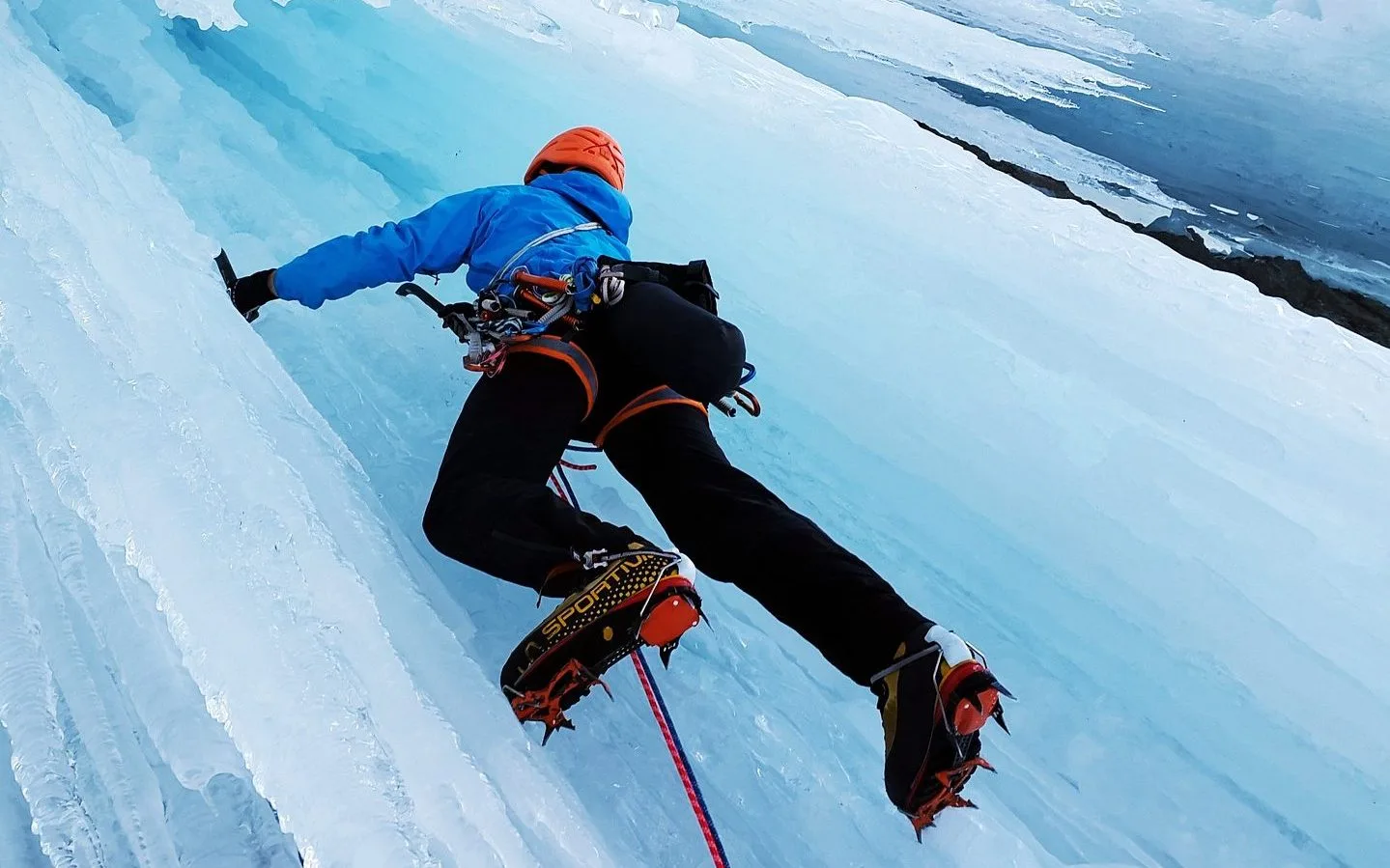
Hypothermia in the mountains is one of the most insidious life-threatening conditions you can encounter beyond civilization. Unlike altitude sickness, it doesn’t announce itself with dramatic symptoms — it starts quietly, with shivering and fatigue, and once it crosses a certain threshold, the victim often stops cooperating and doesn’t realize they’re in mortal danger. Mountain medicine literature and field rescue practice describe the same pattern: a situation can spiral out of control within minutes during a rest on a ridge, for a group that “just wanted a moment to catch breath”.
In this guide I will walk you through exactly what happens to the body during hypothermia, how to recognize the four stages of cooling according to the Swiss Staging classification, how to administer first aid step by step — and above all: what you must absolutely never do. This article is written from the perspective of a practitioner who learns mountain medicine on real people in the field, not in a lecture hall.
Hypothermia kills in the mountains more often than statistics suggest — many cases are classified as “exhaustion” or “trauma” while the actual cause of death was a drop in core body temperature below the critical threshold. According to European Resuscitation Council data, hypothermia victims in extreme weather represent a significant percentage of all deaths during winter hikes and high-altitude expeditions. Knowing the signs of hypothermia and being able to isolate a casualty from wind and cold ground are in practice the two most important skills for anyone walking in the mountains in winter.
TL;DR — key facts
- Hypothermia is a drop in core body temperature below 35°C (95°F). Not “feeling cold” — but the body losing thermoregulatory control.
- The four Swiss Staging stages (HT I–IV) differ very concretely: presence of shivering, consciousness, pulse, breathing — that’s your decision map in the field.
- The most dangerous is the transition from HT I to HT II: shivering stops, the body ceases producing heat. Many people think “I’m feeling better” — and that’s exactly when things get really bad.
- In the field the rule is “no pulse, no breathing, no rewarming in field” — if vital functions are uncertain, do not aggressively rewarm and do not abandon resuscitation.
- An emergency blanket (NRC foil), a 2-person bothy bag, and a dry set of base layers are the three things that really save lives — expensive “technological” bandages are far less important here.
What exactly is hypothermia?
Hypothermia is a condition in which core body temperature falls below 35°C (95°F). You don’t measure it under the armpit or in the ear — those readings are useless in the field with a hypothermic person. Real core temperature is assessed with a rectal thermometer, and in hospital settings via an esophageal thermometer. In the mountains we assess clinical presentation: how the casualty looks, whether they shiver, how they breathe, whether they are conscious.
The human body operates within a very narrow thermal range — so-called normothermia is 36.5–37.5°C (97.7–99.5°F). When core temperature drops, defense mechanisms activate: peripheral vasoconstriction (pale hands and feet), muscle shivering (heat production from muscle work), increased pulse and blood pressure. This stage is the adaptive response — the body tries to cope. The problem is that its resources are limited: muscle glycogen stores last for several hours of intense shivering, then the “battery” runs out.
Who is most at risk of hypothermia in the mountains
- Inexperienced hikers who head into winter mountains in inadequate clothing (cotton, no windproof outer layer) — the most common category of hypothermia victims.
- Children and elderly — worse thermoregulation, less muscle mass for shivering-based heat production. In children, low body temperature develops 2–3 times faster than in adults.
- Injury casualties (fall, avalanche burial, fracture) — immobilization plus exhaustion plus often wet clothing is a recipe for hypothermia within an hour.
- Intoxicated individuals — impaired judgment, disturbed thermoregulation, classic deaths “on the way down from the hut”.
- Climbers and rescuers working in extreme conditions — prolonged exposure to cold, wind and exhaustion, often without immediate possibility to descend.
Mountain weather can change within minutes — even a summer trip above 2500 m can end in hypothermia. That is why, for every trip above the tree line, I pack a windproof jacket, a hat and an emergency blanket regardless of the forecast.
The mechanism of cooling in the mountains — why it’s so dangerous here
In the mountains we lose heat through four pathways, each more aggressive than in the valley:
- Conduction — contact with cold ground, wet clothing, ice. That’s why sitting on a rock “just for five minutes” after a sweaty uphill can cool you more than two hours of walking.
- Convection — wind. Windchill effect can be brutal: at -5°C with 40 km/h wind, perceived temperature drops to roughly -18°C. On an Alpine ridge that’s standard, not extreme.
- Evaporation — sweat and wet clothing. That’s why “don’t overheat on the ascent” isn’t a whim — a sweaty shirt becomes, hours later, a cooling unit stuck to your body.
- Radiation — exposed skin emits infrared into the environment. Head, neck and face lose enormous amounts of heat because they are most vascularized.
Add altitude, which lowers blood oxygen saturation and impairs peripheral circulation, dehydration, which thickens the blood, and physical exhaustion, which depletes glycogen reserves — and you have a recipe for hypothermia within hours, not days.
Four stages of hypothermia — Swiss Staging classification
In mountain medicine we use the classification developed by Swiss rescuers and endorsed by ICAR MEDCOM (International Commission for Alpine Rescue). This scale is based on clinical observation, not on an exact thermometer — which is critically important in the field.
| Stage | Core temp. | Consciousness | Shivering | Decision |
|---|---|---|---|---|
| HT I (mild) | 35–32°C | Conscious, often anxious | Present, intense | Insulate, warm drinks, movement |
| HT II (moderate) | 32–28°C | Impaired, apathy, slowing | Weakened or absent | Hypothermia wrap, gentle evacuation |
| HT III (severe) | 28–24°C | Unconscious but vital signs present | Absent | Urgent evacuation, monitor breathing |
| HT IV (extreme) | <24°C | No signs of life (apparent death) | Absent | CPR + evacuation, “not dead until warm and dead” |
HT I — mild hypothermia (35–32°C)
This is the state most of us recover from without harm — if we recognize it in time. The casualty is conscious but irritable, complains of cold, has intense shivering, pale and cyanotic skin. Often refuses to rest — “I want to keep going, movement will warm me up”. Sometimes right, more often wrong. At this stage shivering is our ally: muscles produce up to 5 times more heat than at rest. But they need fuel — if the casualty is hungry and dehydrated, shivering will stop quickly.
HT II — moderate hypothermia (32–28°C)
Here things get truly dangerous. Shivering stops — paradoxically, many expedition members think at that point “I feel better now”. In reality the body has exhausted its glycogen reserves and is giving up. Apathy appears, slowing of movements, slurred speech, loss of coordination (classic test: ask them to tie their bootlaces — they won’t manage). The famous “paradoxical undressing” is a symptom of this stage — a hypothermic person in disorientation starts removing their jacket because they feel hot. In the Alps and Tatras every year bodies are found in winter partially undressed — that’s not “madness”, it’s a neurological effect of cooling.
HT III — severe hypothermia (28–24°C)
The casualty is unconscious but still has a palpable pulse and breathing. Both are slow, irregular, hard to count — according to ICAR/ERC guidelines assess pulse for at least 60 seconds (in normothermia 10 seconds is enough). Arrhythmia, ectopic beats and bradycardia are the norm at this stage. Any careless movement, jolt, or unnecessary chest compression can trigger ventricular fibrillation — so you treat a person in HT III like a “raw egg”.
HT IV — extreme hypothermia (<24°C), “apparent death”
No pulse, no breathing, pupils may be dilated. But — and this is key — it doesn’t mean the casualty is dead. In deep hypothermia metabolism slows so much that the brain can survive an hour without circulation. The literature describes cases of full neurological recovery after resuscitation lasting over 6 hours. Hence the classic wilderness medicine rule: “Nobody is dead until warm and dead”. If you see a person in HT IV in the field, you start CPR and don’t stop until you hand over to mountain rescue or the patient reaches core temperature of 32°C in hospital.
First aid in hypothermia — step-by-step algorithm
The cardinal rule in hypothermia first aid: first stop further heat loss, only then think about rewarming. It sounds trivial, but 80% of field mistakes consist of trying to “warm up” the casualty before stopping wind, moisture and contact with cold ground. In hypothermia first aid the rule also applies — call for help immediately. Dial emergency services (112 in Europe, 911 in the US) or mountain rescue before you start medical action, because rescue comes to you, while you may not manage to descend with the casualty in reasonable time.
1. Shelter and insulation
Isolate the casualty from wind and ground. In the field we use an emergency 2-person bothy bag — a floorless shelter of bright material that both you and the casualty enter. The breath of two people alone can raise internal temperature by 10–15°C within minutes. This is, in my opinion, the most important winter gear after the first aid kit — and costs less than a good pair of gloves. Alternative: an emergency blanket (NRC foil) placed under the casualty as insulation from the ground (the aluminized side facing the body doesn’t matter — what counts is the barrier against wind and moisture).
Despite the trend that emergency blankets are “passé”, in mountain medicine they remain among the most versatile elements of any first aid kit — waterproof, durable, compact. They serve as improvised stretchers, canopy over a wound, wind shelter. With two emergency blankets and a backpack strap you can also build a rough two-person shelter for on-site hypothermia stabilization — a technique recommended in Wilderness Medical Society field guidelines.
2. Remove wet clothing
Wet clothing accelerates cooling several times over. Even the best down, once wet, loses about 80% of its insulating capacity. In the field: cut wet base layers with scissors (and scissors that actually cut thick clothing — this is one of the most often under-spec’d items in a first aid kit), dry the casualty with a towel, dress them in dry layers. If you have no dry change — a dry sleeping bag and NRC foil are better than a soaked jacket.
3. Hypothermia wrap — emergency burrito
The hypothermia wrap (sometimes called “burrito wrap”) is the gold standard of mountain rescue. Layer order from outside to inside:
- Windproof/waterproof layer (NRC foil, tarp, bivy)
- Insulating layer (sleeping pad, backpack, down clothing)
- Sleeping bag (ideally warm, e.g. comfort rating -10°C)
- Casualty in dry base layer, with a hat and warm socks
- Active heating on chest and neck (hot water bottles, warm water flasks, chemical heat packs)
Do not add heat packs to hands and feet — peripheral vasodilation causes cold blood to flow from the limbs into the heart (afterdrop phenomenon), which may trigger arrhythmia. Warm centrally: chest, neck, armpits, groin.
4. Warm drinks — only for HT I
Warm tea with glucose (not “hot”, as it may burn impaired swallowing reflexes), ideally sweetened — fuel for shivering. Key warning: only give fluids to a conscious patient who can safely swallow. A person with HT II or lower gets nothing by mouth — aspiration risk outweighs benefits. Alcohol is forbidden: it dilates skin vessels, amplifies the feeling of warmth, and in reality accelerates core temperature loss and impairs judgment.
5. Evacuation
HT I — often the casualty can descend on their own after half an hour of shelter and food. HT II+ — mandatory evacuation, ideally by helicopter (mountain rescue services). Until rescue arrives — minimize every movement of the casualty. Any jolt can trigger ventricular fibrillation in a person with core temperature below 28°C.
What you must NEVER do
- Rubbing with snow or chafing skin — Hollywood myth. Causes additional damage and local hypothermia.
- Hot baths or hot showers — dramatic peripheral vasodilation, afterdrop, cardiac arrest. Controlled warming is done in hospital — never in the field.
- Alcohol — explained above. “A shot of brandy to warm up” is one of the most persistent alpinist myths and one of the most harmful.
- Massage or vigorous rubbing of limbs — same afterdrop risk.
- Aggressive rewarming in the field without monitoring — exception: HT I patient, fully conscious, reliable access to warm shelter. Otherwise the rule “no pulse, no breathing, no rewarming in field” applies.
- Premature declaration of death — in deep hypothermia pupils may be dilated, pulse absent, skin cold and cyanotic. You start CPR and continue until rescue arrives.
Resuscitation in hypothermia — how it differs from “standard” CPR
The BLS/ALS algorithm in hypothermia has several crucial modifications per European Resuscitation Council (ERC) and ICAR guidelines:
- Pulse assessment for 60 seconds (instead of 10) — hypothermic bradycardia can produce 1–2 beats per minute.
- Prolonged resuscitation — in HT IV, CPR often lasts 60–240 minutes before effect. Until at least 32°C core is reached, “irreversibility” is not assessed.
- Defibrillation — allowed but often ineffective below 30°C. Guidelines: try up to 3 times, then wait for rewarming to 30°C and resume.
- Medications — adrenaline and amiodarone are less effective in hypothermia; not available in field conditions. Focus on CPR quality and rewarming.
- Transport to ECMO center — in HT III/IV with cardiac arrest the target hospital must have ECMO/CRRT capability (extracorporeal circulation). Communicate this to the rescue coordinator the moment you call for help.
Preventing hypothermia — the three-layer strategy
The best treatment is prevention, and prevention in the mountains starts with the layered clothing system. Three layers isn’t fashion, it’s physics:
- Base layer — wicks moisture from skin. Merino (180–250 g/m²) or quality synthetics. Cotton is forbidden — once wet, it won’t dry in winter conditions and will literally freeze you. In wilderness medicine the saying is “cotton kills”.
- Mid layer (insulating) — fleece, softshell, lightweight down (700+ fill power). Its job is to trap heat. In winter in the mountains, often two such layers depending on movement intensity.
- Shell layer — wind- and waterproof. A membrane (Gore-Tex, eVent, Pertex) or full down when cold and dry. This layer doesn’t insulate — it protects against wind and precipitation.
Add gloves (always a spare pair!), a hat, buff/neck gaiter — and about hats I tell expedition members that a hat is the most important clothing item at night. The head radiates enormous amounts of heat, and a sleeping bag insulates the body, not the head. At Everest Base Camp in 2022 we all slept in hats even at 5364 m. Without a hat you wake up with a headache and sinus pain — it’s not a matter of comfort, it’s a matter of thermoregulation.
Hypothermia after avalanche burial — a special case
An avalanche victim is exposed to the avalanche triad: asphyxia, mechanical trauma, and hypothermia — in that order as causes of death. The cooling rate in snow is approximately 3°C per hour. This means a victim buried 30 min after extraction is usually still in HT I, but after 60–90 min may already be in HT II, and after 3 h in HT III. That is why ICAR guidelines speak of the “golden 15 minutes”: survival chances for burial longer than 35 minutes drop sharply, mainly due to asphyxia, with hypothermia as the second factor.
After extraction: avoid sudden movements, assess per Swiss Staging, apply hypothermia wrap, transport to ECMO if HT III/IV. I cover avalanche triage and MEDCOM algorithm in detail in a separate article on avalanche medicine.
Two field mistakes I see most often
First — haste in rewarming. This isn’t limited to beginners; it affects professional rescuers too. People instinctively want to “do something”: give hot tea, rub hands, wrap heat packs on the feet. In deep hypothermia (HT II and below) any of these can trigger afterdrop or ventricular fibrillation. The order is fixed: first insulate and stop losses, only then think about warming — and only centrally (chest, neck, armpits, groin).
Second — gear that actually works, not props. First aid scissors must cut through thick fleece and membrane, not just paper packaging. The 2-person bothy bag must be tested before the trip, not during the crisis. Silver duct tape is often more valuable than an expensive elastic bandage — stronger, more versatile, works on wet surfaces. The rule is simple: improvisation with gear you actually have and have practiced with under pressure often beats “professional” equipment nobody in the group has ever used.
Frequently asked questions
At what body temperature does hypothermia begin?
Hypothermia is a drop in core body temperature below 35°C (95°F). The Swiss Staging classification (ICAR MEDCOM) divides it into four stages: HT I (35–32°C, mild, with shivering), HT II (32–28°C, moderate, shivering stops), HT III (28–24°C, severe, unconscious with preserved vital signs), HT IV (<24°C, extreme, apparent death). Armpit or ear measurement is useless in the field — clinical assessment is what counts.
Why do hypothermic people undress themselves?
This phenomenon is called paradoxical undressing and occurs in moderate hypothermia (HT II, 32–28°C). Due to severe thermoregulatory dysfunction the brain receives false information about overheating — the victim feels a rush of warmth and intuitively removes clothing. The neurological mechanism involves failure of peripheral vasoconstriction — blood suddenly rushes to the skin, producing a false sensation of warmth. This is a sign that hypothermia is advanced and requires immediate evacuation.
Can you give a hot drink to a hypothermic person in the mountains?
Yes, but only in mild hypothermia (HT I), when the casualty is conscious and able to swallow safely. You give a warm (not hot!) tea with sugar or electrolyte solution — fuel for shivering. In HT II and below, nothing is given by mouth — aspiration risk outweighs benefits. Alcohol is strictly forbidden at every stage — it dilates skin vessels, accelerates core heat loss, impairs judgment, and worsens hypothermia.
What is afterdrop and how to avoid it?
Afterdrop is the paradoxical fall in core temperature (heart, brain) after rewarming begins. It occurs when cold peripheral blood rushes back to the trunk after vasodilation. It can trigger ventricular fibrillation and cardiac arrest. That is why in the field we rewarm only centrally (chest, neck, armpits, groin), we do not place heat packs on feet or hands, we avoid hot baths and sudden casualty movements. In hospital settings ECMO provides controlled rewarming for HT III/IV patients.
When can you stop resuscitating a hypothermic person?
The rule is ”nobody is dead until warm and dead”. In deep hypothermia metabolism is so slowed that the brain can survive an hour without circulation. ICAR/ERC guidelines recommend continuing CPR until rescue hand-over or until core temperature of at least 32°C is achieved in hospital. The literature describes cases of full neurological recovery after resuscitation lasting over 6 hours. The decision to stop is made by an ICU physician, not by a rescuer in the field.
Sources
- Paal P, Gordon L, Strapazzon G, et al. Accidental hypothermia–an update. Endorsed by the International Commission for Mountain Emergency Medicine (ICAR MEDCOM). Scand J Trauma Resusc Emerg Med. 2016;24:111.
- Auerbach PS (ed.). Wilderness Medicine, 7th edition. Elsevier, 2016 — chapter “Accidental Hypothermia”.
- Ward M, Milledge JS, West JB. High Altitude Medicine and Physiology, 5th edition. CRC Press — chapters on cold physiology and altitude.
- Hidalgo J. et al. High Altitude Medicine: A Case-Based Approach. Springer, 2023.
- Brown DJA, Brugger H, Boyd J, Paal P. Accidental hypothermia. N Engl J Med. 2012;367(20):1930-8.
- Truhlář A, Deakin CD, Soar J, et al. European Resuscitation Council Guidelines for Resuscitation 2015: Cardiac arrest in special circumstances. Resuscitation. 2015;95:148-201.
Medical disclaimer: This article is for informational and educational purposes only. It does not replace consultation with a physician or a mountain medicine course. In a mountain emergency, call local rescue services: 112 (Europe), 911 (US), 144 (Switzerland), 140 (Austria), or the appropriate national number.