

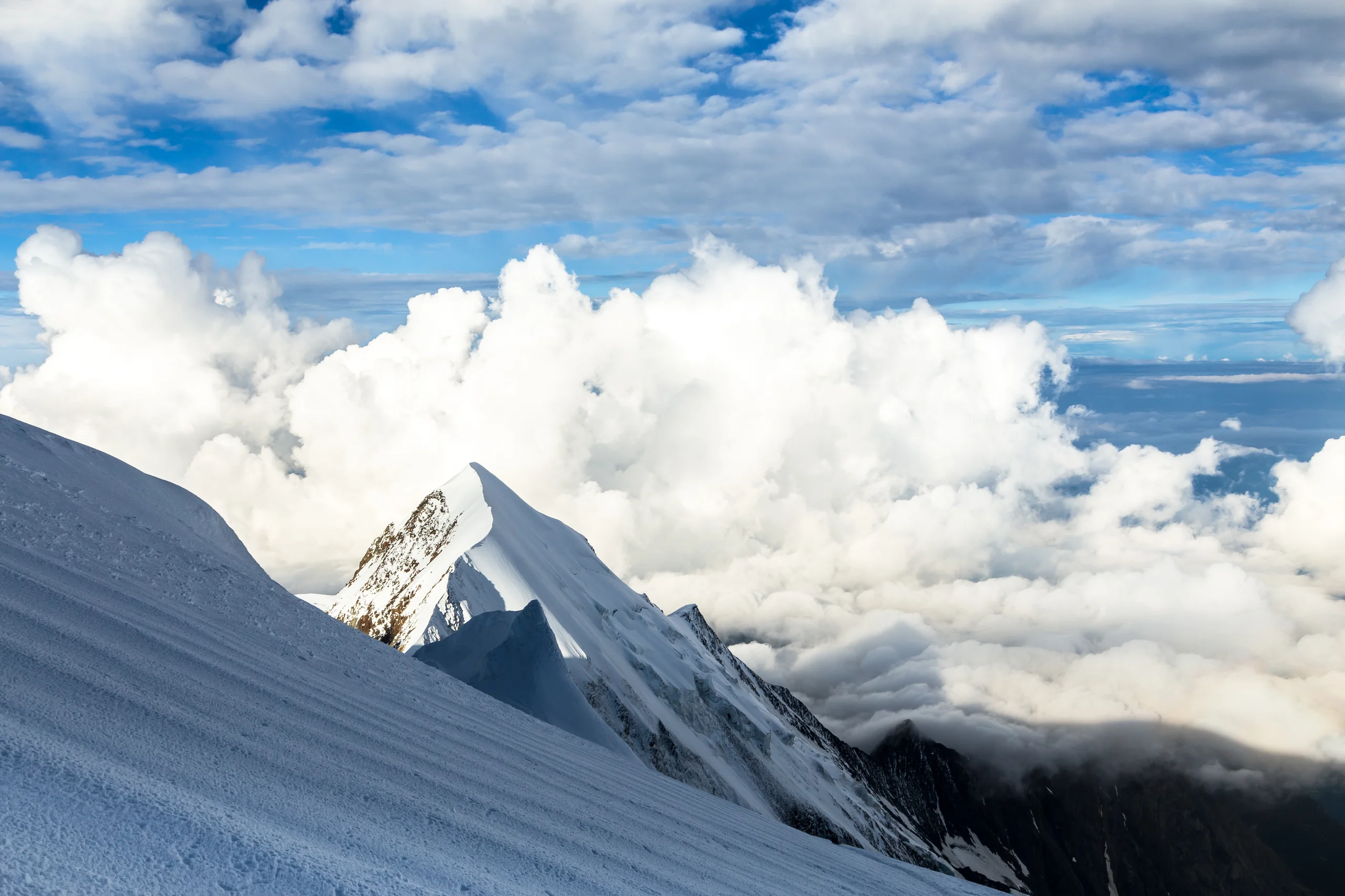
Mont Blanc 4810 m — the highest peak in the Alps, popular choice for first “4000er” for trekkers and climbers. It’s also one of the MOST dangerous easy peaks in the Alps: accident statistics of 100+ deaths yearly (all routes). Reasons: underestimating altitude (4810 m = AMS in 30–40% non-acclimatized), weather volatility, Grand Couloir rockfall. This article: Chamonix acclimatization, medical requirements, insurance, safety protocol.
In a nutshell — Mont Blanc medically
- Altitude: 4810 m (3rd highest in Europe after Elbrus and Dychtau)
- Chamonix acclimatization: 2–3 days (Aiguille du Midi 3842 m as excursion) + 1 night at Goûter 3835 m
- AMS occurs in: 30–40% climbers at Goûter, 10–15% moderate-severe symptoms
- Insurance: Chamonix MRT mandatory, heli rescue €5000–10000
- Season: June–September mainly; May more winter-like, October glacial
- Hazards: Grand Couloir (rockfall), glacier crevasses, afternoon storms
Acclimatization — Chamonix plan
Recommended schedule (6 days)
- Day 1: arrive Chamonix 1035 m, walk around, hydrate, early sleep
- Day 2: cable car to Aiguille du Midi 3842 m (2 h + bounce back), traverse to Refuge Cosmiques or return
- Day 3: trek to Refuge Albert Premier 2702 m or Grands Mulets, overnight
- Day 4: descend to Chamonix, rest, laundry, eat
- Day 5: ascend to Refuge du Goûter 3835 m or Tête Rousse 3167 m, early sleep
- Day 6: alpine start 1:00–3:00 AM, Mont Blanc summit 6–8 h from Goûter
Most common mistake — shortened acclimatization
30% of trekkers attempt Mont Blanc on day 3–4 after arriving in Chamonix. Result: moderate-severe AMS, 50% risk of not summiting, 20% risk of evacuation from Goûter. Minimum 2 nights >3000 m before summit attempt — Aiguille du Midi (3842) daytime does NOT count as acclimatization.
Medical risks of Mont Blanc
1. AMS / HACE / HAPE
- AMS at Goûter (3835 m): 30–40% climbers on first night
- HACE: rare on Mont Blanc (fast summit push + short altitude stay) — 0.5–1% of cases
- HAPE: 0.2–0.5% — rare, but when it happens, rapid progression (everything >4500 m)
- Prophylaxis: acetazolamide 125 mg 2×/day from day 5 (Goûter ascent), ibuprofen 600 mg/6 h as alternative
2. Frostbite
- Summit temperature: -20 to -35°C typically, wind 30–80 km/h
- Risk: fingers, nose, cheeks — alpine start = dark, cold, avoiding stops
- Prophylaxis: 3-layer gloves, face mask, insulated boots, heated insoles
3. Grand Couloir — rockfall
Grand Couloir is an ice gully between Tête Rousse and Goûter, crossed 2 times (up and down). Rocks fall from the Rebuffat faces above, especially after 10:00 AM when sun melts ice. Statistic: 30–40 deaths/year in 2020–2024 here. Rules: cross before 7:00 AM and after 17:00 (when refrozen), helmet mandatory, wings above — watch for falling rocks.
4. Afternoon storms
Summer in the Alps = storms between 12:00 and 18:00. Mont Blanc summit is a “lightning magnet” — metal ice axe + altitude. Protocol: max 15 min on summit, descend to Goûter before 12:00, bunker into Vallot shelter 4362 m when weather deteriorates.
Mont Blanc medical kit
- Acetazolamide (Diamox) 250 mg × 10 tabs
- Ibuprofen 400 mg × 20 tabs (headaches + AMS alt)
- Paracetamol 500 mg × 20 tabs
- Dexamethasone 4 mg × 6 tabs (HACE rescue)
- Nifedipine XL 30 mg × 4 tabs (HAPE rescue)
- Hydrocolloid dressings for blisters (essential)
- SPF 50+ sunscreen + lip balm with SPF
- Category 4 sunglasses (glacier, snow)
- Fingertip pulse oximeter (cheap, light, critical for monitoring)
- Satellite phone or Garmin InReach (especially for solo climbers)
Insurance — absolutely mandatory
- Chamonix Mountain Rescue (PGHM): licensed unit, heli rescue €5000–10000/hour
- Polish mountain insurance (PZU, Signal Iduna, ERGO): ~$25–50 per week, coverage up to €50000 — sufficient for Mont Blanc
- Note: check if policy covers glacier climbing and high-altitude >4500 m
- Global Rescue: $200–400 for 1–2 week expedition — more flexible, own evacuation team
- Ski-pass or MRT card (Mountain Rescue Team) — local cards often include rescue assistance
Frequently asked questions
How many days of acclimatization for Mont Blanc?
Minimum 3-4 days in Chamonix before summit attempt. Standard plan: day 1 arrival (1035 m), day 2 Aiguille du Midi 3842 m (bounce back), day 3 trek to Refuge Albert Premier 2702 m (1 night), day 4 descend, day 5 Goûter 3835 m (1 night), day 6 summit push. Shortening to 2 days = AMS in 50%+ climbers, risk of failure. Shortening to 1 day (arrival -> summit next day) practically IMPOSSIBLE for most without high-altitude experience.
Is Mont Blanc harder than Kilimanjaro?
Technically YES, altitude-wise NO. Kilimanjaro (5895 m) is higher, so AMS/HAPE risk theoretically greater – but gentle trekking, no climbing. Mont Blanc (4810 m) lower, but requires: 1) glacier climbing (crampons, ice axe, rope); 2) Grand Couloir crossing (rockfall); 3) alpine start in darkness. For trekker without climbing experience: Kilimanjaro BETTER. For someone with glacier experience: Mont Blanc faster and closer (Europe). Death statistics are HIGHER on Mont Blanc (100 vs 10-20 on Kili).
When is the best time for Mont Blanc?
June–September is classic season. June: still lots of snow, better ice conditions, but cold (-30°C summit). July-August: warmest (-15 to -20°C summit), but most afternoon storms and Grand Couloir rockfall. September: cooler, fewer people, more stable weather – many guides recommend SEPTEMBER as best month. October already risky (snow, ice, short days). November-April: only for experienced winter alpinists.
Diamox for Mont Blanc – yes or no?
Yes, if you have AMS history or it’s your first 4000er. Acetazolamide 125 mg 2x/day from Goûter ascent day (3835 m) reduces AMS risk 40-60%. Side effects (tingling, metallic taste, more peeing) are not significant compared to benefit. Alternative: ibuprofen 600 mg every 6 h (prophylaxis via different mechanism – reducing inflammation). If you’ve been at 4000+ m without issues – Diamox not essential. Still carry it in kit as ‘rescue’ for AMS.
Is a mountain guide needed for Mont Blanc?
Officially NOT required, but French mountain police (PGHM) and FFCAM (alpine club) strongly recommend. Mont Blanc requires skills: glacier climbing (short ice bridges, crossing crevasses), partner protection on rope, glacier assessment. Without experience or without guide: statistical risk 5-10x higher for death/serious accident. IFMGA guide: €1500-2500 for 2 days. Alternative: 3-4 day glacier course in Chamonix with same guide + summit attempt = €2500-3500. Strongly recommended for first 4000er.
References
- PGHM Chamonix — rescue operation statistics 2020–2024.
- FFCAM (Fédération Française des Clubs Alpins et de Montagne) — Mont Blanc climbing guide.
- Luks AM, Auerbach PS, et al. Wilderness Medical Society Clinical Practice Guidelines 2019.
- Ward, Milledge, West. High Altitude Medicine and Physiology, 5th ed.
Note: Mont Blanc is the most “deceptive” peak in the Alps — looks like an easy trip from Chamonix, but annual death toll exceeds the Himalayas. Consultation with IFMGA guide and mountain medicine physician before expedition. Numbers: PGHM Chamonix +33 4 50 53 16 89.